• HOME
  • SERVICES
    • CONSULTING & DESIGN
    • CERTIFY
    • INSURE
    • 4 Types of Tiny Homes
  • Movable
    • Mendocino County Moveable Tiny Home Zoning
    • SOLD 32' 2 Bedroom Tiny Home
  • MEDIA
  • BLOG
  • ABOUT
    • Past Events
    • Speaking
    • Tiny Home Investing
  • CONTACT
  TINY HOME LADY
  • HOME
  • SERVICES
    • CONSULTING & DESIGN
    • CERTIFY
    • INSURE
    • 4 Types of Tiny Homes
  • Movable
    • Mendocino County Moveable Tiny Home Zoning
    • SOLD 32' 2 Bedroom Tiny Home
  • MEDIA
  • BLOG
  • ABOUT
    • Past Events
    • Speaking
    • Tiny Home Investing
  • CONTACT

The Deposit Problem in Factory-Built Housing

1/31/2026

0 Comments

 
 S
Why Treating Homes Like “Products” Leaves Homeowners Unprotected

California has some of the strongest consumer protection laws in the country when it comes to residential construction. And yet, a growing number of homeowners pursuing ADUs and factory-built housing are finding themselves financially exposed — sometimes losing tens of thousands of dollars with little recourse.

This isn’t happening because homeowners are careless. It’s happening because the law has not kept pace with modern housing delivery models.

The $1,000 Deposit Rule — and Where It Breaks Down

Under California law, contractors performing home improvement work are generally limited to collecting no more than $1,000 or 10% of the contract price (whichever is less) as an upfront deposit. This rule exists for a reason: to prevent homeowners from handing over large sums of money before meaningful work has been performed.
When this law applies, it works.

The problem is that factory-built, modular, prefab, and ADU projects often fall into a legal gray area — sometimes treated as…
  • product purchases,
  • manufacturing agreements,
  • or hybrid design-build contracts,
…rather than as housing or real estate transactions.

Which category applies often depends not on the lived reality of the project, but on how the contract is written.

Factory-Built Housing Is Treated Like a Product — But Lives Like Real Estate

On paper, factory-built housing is frequently treated as a product — something manufactured off-site, purchased through a sales or production agreement, and paid for upfront.

But once that “product” is delivered and installed, it becomes real property.
  • It is permanently affixed to land.
  • It requires permits, inspections, and a Certificate of Occupancy.
  • It affects property value, financing, taxes, insurance, and inheritance.

In every meaningful way, it functions as real estate, not a consumer good.
Yet the protections that normally accompany real estate transactions — such as regulated escrow, milestone-based fund release, and professional errors-and-omissions insurance — often do not apply at the point when homeowners are most financially exposed.

This mismatch creates a dangerous gap: homeowners are asked to pay for housing as if they are buying a product, while assuming the risks of a real estate development — without the safeguards that typically protect buyers in real estate transactions.

If factory-built homes ultimately become real estate — and they do — then consumer protections should reflect that reality. (Please refer to the chart below to view the differences of Factory Built Housing vs. Real Estate)
​

Picture

The Gap Bad Actors Exploit

In this gray zone, some contractors structure agreements to bypass deposit limits by separating:
  • “unit purchase” contracts,
  • factory production agreements,
  • consulting or design contracts,and site work agreements.

This can allow large upfront deposits to be collected without:
  • escrow protection,
  • milestone verification,
  • or independent oversight
​
Once funds are deposited directly into operating accounts, homeowners assume nearly all the risk. If a contractor stalls, closes, or fails to perform, homeowners often become unsecured creditors with limited options for recovery.

This is not theoretical. It is happening repeatedly — and predictably.

There Is No Deposit Insurance for Housing Construction
  • Unlike banks, construction deposits are not insured.
  • Unlike real estate transactions, escrow is often optional or absent.
  • Unlike other consumer industries, there is no automatic backstop when contractors fail.

For homeowners using life savings, retirement funds, or home equity to build ADUs, the consequences of this gap are devastating. This Is a System Failure — Not a Homeowner Failure. 

Homeowners reasonably assume:
  • Licensing equals protection
  • Permits equal progress
  • Deposit requests equal standard practice

But in factory-built housing, those assumptions are often unsupported by enforceable safeguards.

Good contractors are harmed by this too. When standards are unclear, bad actors operate longer — eroding trust across the entire industry.

In a world of Housing Crisis this MUST CHANGE
  • Homes are not startups.
  • Housing is not a speculative product.
  • Failure should not be normalized when homeowners carry all the downside.

If California and other states want to expand ADUs and innovative housing solutions, they must modernize consumer protections to reflect how housing is actually delivered today.
​

That means:
  • Clear deposit rules that apply to factory-built housing
  • Required third-party escrow for large deposits
  • Payments tied to verified milestones
  • Professional insurance standards similar to real estate
  • Real consequences for non-performance

​Housing innovation without consumer protection isn’t progress. It’s risk transfer.
Homeowners must demand stronger structures — and policymakers must act.

Be Well, 
Lindsay Wood
Tiny Home Lady®

0 Comments

Call to Action: Protect Yourself Before You Sign

1/29/2026

1 Comment

 
Picture
Until the U.S. has real deposit insurance or stronger consumer protections for residential construction, homeowners must act as their own risk managers.

If you are considering an ADU or small home project, here are concrete steps you can take to protect yourself:

1. Do deeper due diligence than feels necessary. Don’t rely on marketing, testimonials, or confidence alone. 
Ask for:
  • Proof of recently completed projects (not just photos)
  • ​Client references you can speak to directly
  • Clear timelines with consequences for non-performance
  • Confirmation of license status, bonding, and insurance — verified independently

2. Never hand over a large deposit without safeguards. Because there is no deposit insurance for construction in the U.S., large upfront payments place all the risk on the homeowner.
Whenever possible:
  • Avoid lump-sum deposits (this will not be popular with quality companies but if they are quality company they may work with you using an escrow account).
  • Question any request that feels disproportionate to work performed
  • ​Understand exactly what your deposit is paying for right now
​
3. Use escrow — even if the contractor doesn’t suggest it You can request a third-party escrow account where funds are released only when specific, documented milestones are completed.
Examples include:
  • Permitting process includes application submittal, back and forth with the jurisdiction and final approval, surely there are some steps in there to hold back funds on until they have performed the work. Do you ever give your mechanic, dentist or doctor money upfront?
  • Site prep or foundation completion
  • Factory production milestones
  • Delivery to site
  • ​Installation and Certificate of Occupancy

If a contractor resists escrow or milestone-based payments, find out why and you may want to treat that as a serious red flag, not a minor inconvenience. If you are reading this you can reference the fact that no matter how great of a person you think they are, your financial resources needs to be protected.

4. Tie payments to verification, not promises. 
Every payment should correspond to:
  • A clearly defined milestone
  • Written confirmation or inspection
  • Photos, documentation, or third-party verification
  • ​If progress cannot be verified, payment should not be released.

5. Get independent eyes on the contract
Before signing:
  • Have a construction attorney or knowledgeable advocate review the agreement
  • Watch for vague timelines, open-ended language, or clauses that limit your remedies
  • ​Ask what happens if the contractor fails to perform — and get the answer in writing

6. Trust your hesitation
If something feels rushed, unclear, or overly optimistic — pause. Housing is not a startup gamble. Your home, savings, and future deserve more than trust alone.

Until the system changes, protection starts with preparation.Doing this work up front may feel uncomfortable or “difficult,” but it can prevent years of stress, financial loss, and uncertainty later. Until stronger consumer protections exist, asking hard questions is not being difficult — it’s being responsible.

If you’re already in a project or want help understanding your options, seek out independent advocates and resources — and know that you are not alone.

✨ In housing, diligence is protection. ✨

Be Well, 
Lindsay Wood 
Tiny Home Lady®
1 Comment

Recent Independent Reporting on Dave Clevenger and PreFab Innovations

1/29/2026

0 Comments

 
Over the past several weeks, multiple journalists and news outlets have published in-depth reporting examining housing projects, public funds, business entities, and legal disputes connected to Dave Clevenger and PreFab Innovations.
For those seeking context, transparency, and primary sources, I’m sharing links to this independent reporting below. I encourage readers to review the articles directly and draw their own conclusions.

Kings Network News By Francisco Ramirez Jr.
  • Part 1: Housing Projects, Public Funds, and a Trail of Business Names
    https://tinyurl.com/Pt1-KingsNetworkNewsPFI
  • Part 2: Ongoing Projects, Legal Disputes, and Oversight Questions
    https://tinyurl.com/Pt2-KingsNetworkNewsPFI
  • Part 3: Continued Reporting on Housing Developments and Lawsuits
    https://tinyurl.com/Pt3KingsNetworkNewsPFI

Investigative Series By Paul Flores
  • Part 1: The Clevenger Collapse: Public & Private Funds in Central Valley Housing
    https://tinyurl.com/ClevengerCollapse
  • Part 2: The Visionary, the Victims, and the Varnish
    (Scroll below the LinkedIn image for Part 2)
    https://tinyurl.com/Part2-Victims-and-Varnish
  • Part 3: The Gospel of Gain
    https://tinyurl.com/P3-Gospel-of-Gain

Why I’m Sharing ThisHousing affects real people — families, elders, and homeowners using personal savings to create stability. Below are personal accounts shared with permission, with names changed for privacy.

Jane (name changed) is 75 years old and lives in Mendocino County. She owns a 2-bedroom, 1-bath home. Her adult daughter and two teenage grandchildren planned to move into a 576 sq. ft. ADU in the backyard. Nearly two years after contracting with PreFab Innovations, Jane has a permit but no building to show for the approximately $60,000 deposit she paid. Jane is retired and disabled, and now must continue repaying a home equity line of credit she took out to fund the project, with no clear path to completion.

Linda (name changed) saved carefully to add an ADU to her property so she could generate rental income. She paid approximately $43,000 in cash as a deposit. Fourteen months later, with no structure on site, she is now facing the prospect of financing the entire project — something she did not originally plan or budget for.

Jeff (name changed) intended to create a multigenerational living arrangement by building an ADU for his parents in his backyard. Sixteen months later, with no meaningful progress and limited communication, his parents are now living inside his home — a situation none of them anticipated.

These stories are not isolated. They reflect the experiences of many homeowners who entered into ADU contracts in good faith, relying on timelines, representations, and trust.

Why Independent Journalism Matters
Independent journalism plays an essential role in bringing facts, timelines, and accountability into the public record. Sharing verified reporting helps ensure conversations remain grounded in evidence rather than speculation.

As always, I encourage thoughtful reading, respectful dialogue, and a focus on solutions that protect homeowners and strengthen consumer safeguards in housing. If you are looking at hiring a contractor please 

A Publicly Stated Vision
Below is a screenshot from the PreFabInnovations.com website (captured 1/29/25), under Vision & Goals:
“PreFab Innovations will lead the transformation of housing production in California.
Will serve our customer as if our own family was going to live there.”

I’m sharing this not as commentary, but as context — so readers can compare publicly stated goals with the experiences and reporting described and linked above.

Be well, 
Lindsay Wood
Tiny Home Lady®

Picture
​
0 Comments

10 Tiny Home Interior Design Hacks That Make Your Space Feel Twice As Big - Collaborative Blog by Tiny Home Leaders

5/28/2025

0 Comments

 
Picture
I was very impressed when I read this article live on Rent.Blog and how the team curated responses from leaders in the Tiny Home Space. I am personally honored to be part of this article featuring my perspectives on Tiny Home design and specifically Tiny Home Lady® pro tips including #1 type of paint, #8 built in-furniture, #9 storing seasonal items in harder to reach places.

Summary of Article...
Living small doesn’t mean you have to sacrifice style. A tiny home is the perfect opportunity to get creative with every inch of available space.

Whether you are designing your own tiny house to rent in Durango, CO, renting a small apartment in Asheville, NC, or looking at your dream Catskills vacation home in Oneonta, New York, check out the feature on Rent. for 10
Tiny Home Interior Design Tips That Make Your Space Feel Twice As Big.

Want to know more give the whole article a read HERE 

0 Comments

Home Sweet Tiny Home..." Try Before You Buy"

12/12/2023

1 Comment

 
Picture
Welcome to the world of Tiny Home Living. In this blog we will be revealing some of the key reasons why the
"Try Before You Buy" part of your journey is so important. After all it's one part adventure, one part reality check, and all about embracing the journey.

Why Tiny Living?
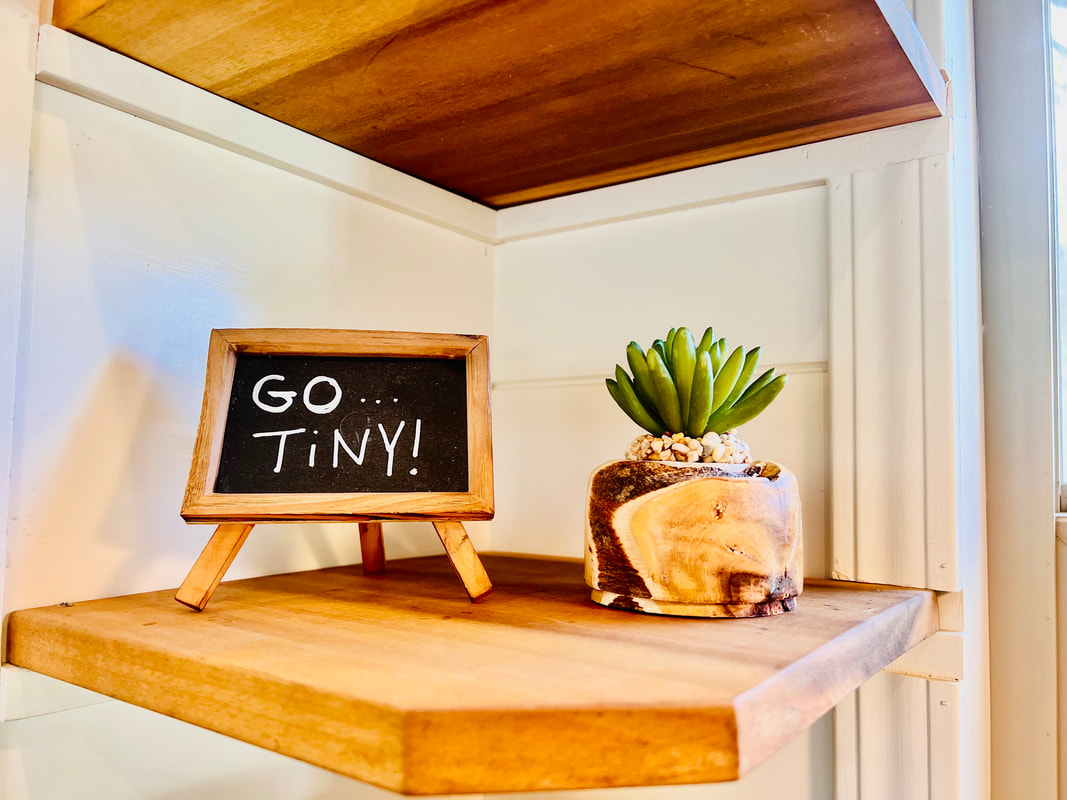
  • Size Matters: Before you get too excited about an Instagram-worthy tiny home, let's face it – size matters. How much space do you need? Tiny homes challenge your preconceptions and teach you that bigger doesn't always mean better unless that having more space is essential. For many the limits of 400 square fee on wheels is just the perfect size and for others smaller the better.
  • Decluttering and Downsizing: Trying out a Tiny home lets you dip your toes into the serene waters of decluttering, helping you decide what is most important to take with you.
  • Eco-Friendly Living: Tiny Home living is a terrific step towards reducing your footprint making Mother Earth do a little happy dance. Who knew downsizing could transform you into a planetary hero?
Picture

  • Spatial Awareness: Spend a couple of days in a number of tiny homes, and learn what you like and don’t like about the layout the decor, and most importantly what amount of space YOU need. No Instagram, Pinterest or YouTube video can tell you what you need, you’ve got to experience it for yourself.
  • Personal Preferences: Tiny homes come with unique design challenges. Trying one out lets you explore what layout works best for you, understanding the importance of having a dedicated space for essentials and cherished belongings.
  • Essential vs. Non-Essential Items: Living in a tiny home forces you to reevaluate your belongings. Trying before buying allows you to identify the items that truly enhance your life and separate them from unnecessary clutter.
Picture
What to Observe During Your Staycation:
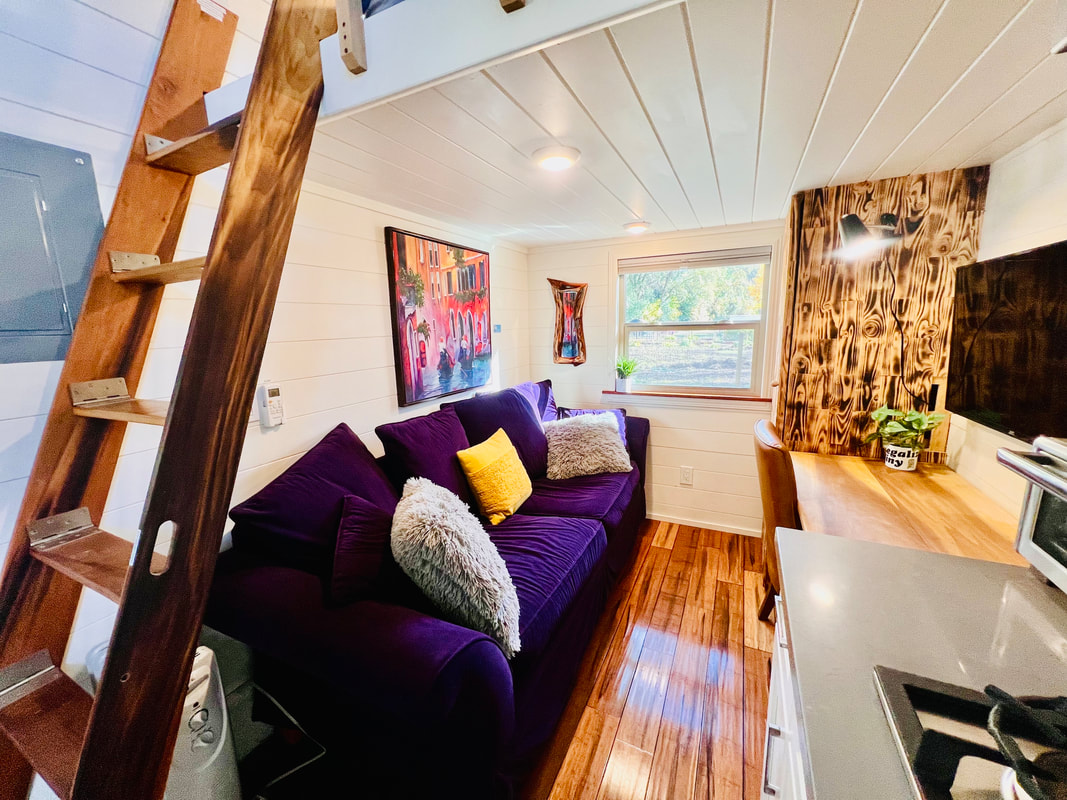
  • Functionality: Evaluate the functionality of the space. Does the layout align with your daily routine?
  • Storage Solutions: Pay attention to the storage options available. Are they sufficient for your belongings?  Tiny living forces you to confront your belongings and fashion choices – keep what sparks joy and ditch the rest. Marie Kondo would be proud.
  • Natural Light and Ventilation:  In a tiny home, the windows are your connection to the outside world. Natural light and ventilation is essential in a compact space. What type of utilities are you wanting to use. For Propane or Natural Gas stoves be sure to have outside venting for your home or get an induction. You may consider an ERV/HRV system to keep the fresh air flowing.
  • Bathroom Beliefs: In a tiny home, the bathroom is an important part of the home. For some, a shower is just fine and for others, a bathtub is a must. It’s all about how big you want to go, what your budget will allow, and what it is you need most in your home. Do not let anyone else tell you what you should or shouldn’t do in your home…after all your the one paying for it.​
Picture
​Trying out a tiny home is more than just a test run; it's an adventure in life choices

It’s about…
  • Getting really honest with what you need to keep or let go
  • Knowing what works best for you
  • Discovering what truly sparks joy in your life

Whether you find yourself embracing the cozy confines of tiny living or realize you need a bit more elbow room, the journey to figuring it all out is part of the adventure. So, pack your sense of humor and get ready for a miniature escapade that might just redefine your idea of “Home Sweet Tiny Home” – one square foot at a time!

​Let's GO TiNY!
​Lindsay Wood, Tiny Home Lady®

1 Comment
<<Previous
    Picture

    Author

    The Tiny Home Lady® on a mission to co-create 100,000 Homes across the US!

    Archives

    January 2026
    May 2025
    December 2023
    October 2023
    September 2023
    August 2023
    October 2021
    August 2021
    March 2021
    February 2021
    January 2021
    September 2020
    July 2020
    June 2020
    February 2020
    January 2020
    December 2019
    October 2019
    August 2019
    June 2019
    May 2019
    January 2019
    November 2018
    October 2018

    Categories

    All

    RSS Feed

SCHEDULE YOUR DISCOVERY CALL
Helping 100,000 families unlock housing solutions through Tiny Homes Movable and Permanent.


YouTube      Facebook    Instagram
TikTok         LinkedIn

Non-Profit Partners
Picture
  • HOME
  • SERVICES
    • CONSULTING & DESIGN
    • CERTIFY
    • INSURE
    • 4 Types of Tiny Homes
  • Movable
    • Mendocino County Moveable Tiny Home Zoning
    • SOLD 32' 2 Bedroom Tiny Home
  • MEDIA
  • BLOG
  • ABOUT
    • Past Events
    • Speaking
    • Tiny Home Investing
  • CONTACT